
As a parent, few experiences are more heartbreaking than watching your child struggle in school. You may notice increasing frustration with homework, frequent calls from teachers, declining grades, anxiety about attending class, or a growing belief from your child that they simply “aren’t smart.”
When this happens, many parents wonder whether the problem is their child—or the educational environment.
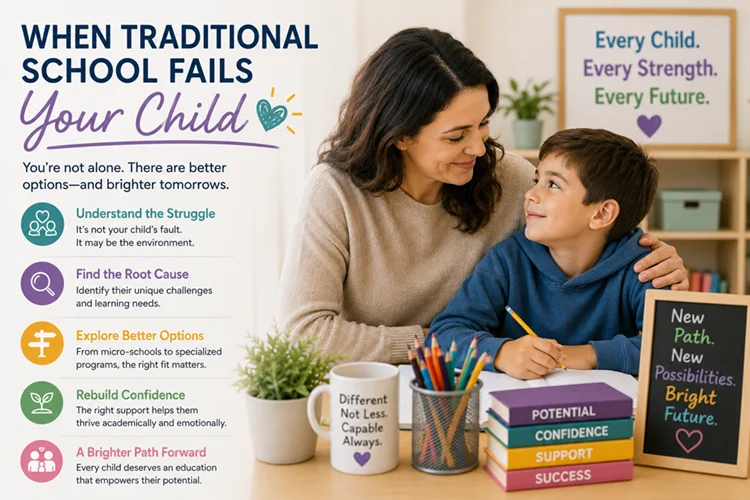
The truth is that traditional schools aren’t designed to meet the needs of every learner. While many children thrive in conventional classrooms, others require a more personalized approach. If your child isn’t succeeding in a traditional school, it doesn’t mean they lack intelligence or potential. It may simply mean they need an environment that understands how they learn best.
At Adaptive Learning Academy (ALA), we believe every child deserves an education that recognizes their strengths, supports their challenges, and helps them build confidence through individualized learning.
Recognize That Your Child Is Not the Problem
Many parents blame themselves when school isn’t working.
Others worry that their child simply isn’t trying hard enough.
In reality, children who struggle in traditional classrooms are often working incredibly hard just to keep up with expectations that don’t match their learning style.
Every brain processes information differently. Some children need more movement, smaller learning environments, visual instruction, sensory supports, or additional time to master new concepts.
Needing a different educational approach isn’t a failure—it’s simply recognizing that learning isn’t one-size-fits-all.
Look Beyond Grades
Grades only tell part of the story.
Even children earning average grades may be experiencing:
- Constant anxiety
- Emotional exhaustion
- Low self-esteem
- Social isolation
- Sensory overload
- Difficulty staying focused
- Frequent meltdowns after school
Ask yourself:
- Does my child enjoy learning?
- Are they excited to go to school?
- Do they feel understood?
- Are they building confidence?
- Are they making meaningful progress?
Academic success should never come at the expense of emotional well-being.
Identify What’s Really Causing the Struggle
School difficulties rarely have a single cause.
Some children struggle because they have an undiagnosed learning difference. Others may need more individualized instruction or a quieter classroom environment.
Common factors include:
- Autism Spectrum Disorder (ASD)
- ADHD
- Dyslexia
- Dysgraphia
- Speech and language challenges
- Sensory processing differences
- Executive functioning difficulties
- Anxiety
- Large classroom environments
Understanding the root cause allows families to make informed decisions rather than relying on guesswork.
Communicate With the School
Before making major decisions, schedule a meeting with your child’s teachers and support staff.
Ask questions such as:
- Where is my child succeeding?
- What specific challenges are being observed?
- What interventions have been tried?
- How is progress being measured?
- What additional supports are available?
Approaching the conversation as a partnership often leads to better outcomes.
However, if concerns continue despite appropriate interventions, it may be time to consider other educational options.
Trust What You’re Seeing at Home
Parents know their children better than anyone.
If your child comes home overwhelmed every day, refuses to attend school, loses confidence, or begins believing they are incapable, those experiences deserve serious attention.
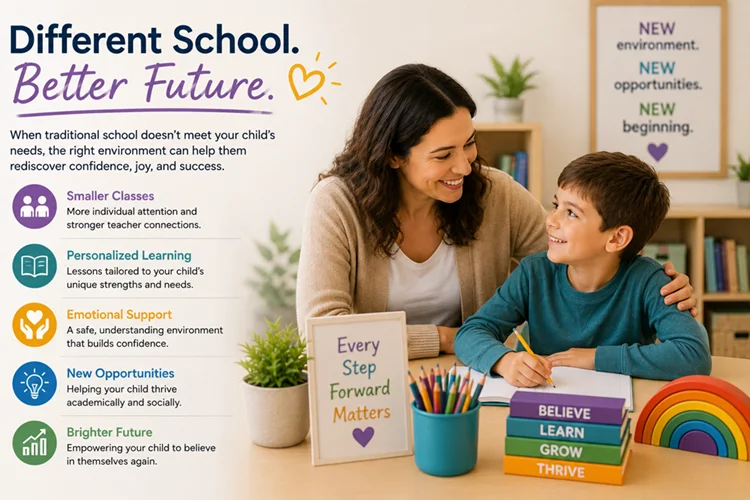
It’s important not to dismiss these concerns simply because report cards appear acceptable.
Emotional health is just as important as academic achievement.
Consider Whether the Environment Is the Issue
Traditional classrooms often require students to learn at the same pace using similar instructional methods.
For some children, this works well.
For others, it creates unnecessary barriers.
Children who benefit from alternative educational environments often need:
- Smaller class sizes.
- More individualized instruction.
- Flexible teaching methods.
- Sensory-friendly classrooms.
- Predictable routines.
- Additional movement breaks.
- Stronger teacher relationships.
Changing environments isn’t giving up—it’s finding a setting where your child can thrive.
Explore Specialized Educational Options
If traditional school continues to be a poor fit, several alternatives may better meet your child’s needs.
Depending on your family’s situation, options may include:
- Specialized micro-schools
- Private special education schools
- Homeschooling
- Hybrid education programs
- Online learning
- Therapeutic educational programs
Each option offers different benefits, so consider your child’s learning style, personality, and support needs.
Focus on Rebuilding Confidence
Children who experience repeated academic struggles often begin doubting themselves.
One of the most important goals after changing educational environments is restoring confidence.
Celebrate:
- Small improvements.
- Effort.
- Curiosity.
- Creativity.
- Problem-solving.
- Persistence.
Children who believe they can succeed become more willing to tackle new challenges.
Build a Strong Support Team
Helping a struggling learner isn’t something parents should have to do alone.
Your support network may include:
- Teachers
- Special educators
- Therapists
- Behavior specialists
- Speech-language pathologists
- Occupational therapists
- Pediatricians
- Educational advocates
When professionals work together, children receive more consistent and effective support.
Give Change Time
Even after moving to a more supportive educational environment, progress doesn’t happen overnight.
Children may need time to:
- Feel emotionally safe.
- Build trust with teachers.
- Develop new routines.
- Regain confidence.
- Adjust to different expectations.
Celebrate gradual progress instead of expecting immediate transformation.
Signs Your Child Is in the Right School
When children are in an environment that supports their unique learning needs, families often notice meaningful changes.
Some positive signs include:
- Increased confidence.
- Reduced school-related anxiety.
- Greater participation in learning.
- Stronger relationships with teachers.
- Improved emotional regulation.
- More enthusiasm about school.
- Consistent academic growth.
- Willingness to try new challenges.
Success isn’t about perfection—it’s about steady growth and a child who feels supported.
How Adaptive Learning Academy Supports Students Who Haven’t Thrived in Traditional Schools
At Adaptive Learning Academy (ALA), we understand that many families come to us after feeling discouraged by traditional educational settings.
Our specialized micro-school is designed to provide:
- Small classroom environments
- Personalized learning plans
- Sensory-friendly learning spaces
- Experienced special educators
- Integrated ABA support when appropriate
- Individualized instruction for neurodiverse learners
Rather than expecting every student to fit a standard educational model, we tailor learning experiences to each child’s strengths, interests, and developmental needs. Our goal is to help students rebuild confidence while making meaningful academic, social, and emotional progress.
When Is It Time to Make a Change?
Every family’s situation is different, but it may be time to explore alternative educational options if your child consistently:
- Dreads going to school.
- Experiences ongoing academic struggles.
- Feels misunderstood.
- Shows declining self-esteem.
- Receives repeated disciplinary referrals.
- Isn’t making meaningful progress despite support.
- Appears emotionally exhausted after school.
Choosing a different educational path isn’t admitting defeat. It’s making a thoughtful decision based on what your child truly needs.
Final Thoughts
When traditional school fails your child, it’s natural to feel worried, frustrated, or uncertain about what comes next. But one school experience doesn’t define your child’s future.
Every child deserves an environment where they are understood, encouraged, and given the opportunity to learn in ways that match their unique strengths.
With the right support, personalized instruction, and compassionate educators, children who once struggled can rediscover the joy of learning, build lasting confidence, and reach their full potential. Sometimes the most important step isn’t asking your child to change—it’s finding a school that’s willing to meet them where they are.