
When parents are searching for the right educational environment, curriculum and facilities often receive the most attention. However, one factor has an enormous impact on a child’s daily learning experience: the student-to-teacher ratio.
In a traditional classroom, teachers may be responsible for more than 20 students at a time, making individualized attention difficult. In contrast, micro-schools intentionally keep class sizes small, allowing educators to truly understand each child’s strengths, challenges, and learning style.
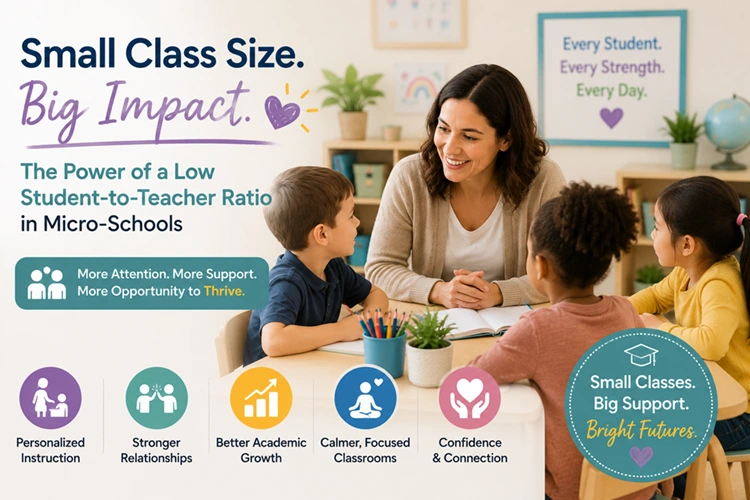
For neurodiverse learners, this personalized approach can be life-changing. Smaller classrooms provide opportunities for stronger relationships, individualized instruction, and greater confidence—creating an environment where children don’t simply keep up, but genuinely thrive.
At Adaptive Learning Academy (ALA), our specialized micro-school model is built around small classrooms, personalized education, and integrated support designed specifically for neurodiverse students.
What is a Student-to-Teacher Ratio?
The student-to-teacher ratio refers to the number of students assigned to each teacher within a classroom or school.
For example:
- A 25:1 ratio means one teacher works with 25 students.
- A 10:1 ratio means one teacher supports 10 students.
- Many micro-schools operate with significantly lower ratios, allowing educators to provide more individualized attention.
While the exact numbers vary between schools, the overall goal remains the same: ensuring every student receives the support they need to succeed.
Why Student-to-Teacher Ratio Matters
A smaller ratio changes nearly every aspect of the learning experience.
When teachers have fewer students, they can:
- Spend more one-on-one time with each child.
- Identify learning challenges earlier.
- Adjust lessons to individual learning styles.
- Provide immediate feedback.
- Build stronger relationships.
- Create a calmer classroom environment.
Instead of trying to divide their attention among dozens of students, teachers can focus on helping each learner make meaningful progress.
The Benefits of Small Class Sizes for Neurodiverse Learners
Children with autism, ADHD, dyslexia, sensory processing differences, and other learning needs often benefit from educational environments that offer greater flexibility and individualized support.
More Personalized Instruction
Every neurodiverse child learns differently.
Some students learn best through visuals, while others need hands-on experiences, movement, repetition, or extra processing time.
With fewer students, teachers can modify instruction throughout the day rather than relying on a single teaching method for the entire class.
Personalized learning allows children to experience success without feeling pressured to learn exactly like everyone else.
Stronger Teacher-Student Relationships
Children learn best when they feel safe, understood, and supported.
Smaller classrooms allow teachers to truly know each student beyond academic performance.
They learn:
- Individual interests
- Learning preferences
- Communication styles
- Sensory needs
- Emotional triggers
- Personal strengths
These relationships help children feel comfortable asking questions, taking risks, and trying new challenges.
Earlier Identification of Learning Needs
In larger classrooms, subtle learning difficulties can sometimes go unnoticed.
Teachers managing many students may not immediately recognize small changes in academic performance, attention, or behavior.
Smaller class sizes make it easier to identify when a child needs additional support.
Early intervention often prevents minor challenges from becoming significant academic obstacles.
Greater Classroom Participation
Some children hesitate to participate in large classrooms.
They may worry about making mistakes, becoming overwhelmed by noise, or competing for attention.
Micro-school environments encourage:
- More classroom discussions.
- Individual participation.
- Collaborative learning.
- Comfortable question asking.
- Increased confidence.
Every child’s voice has an opportunity to be heard.
Fewer Distractions
Busy classrooms can be challenging for children who struggle with attention, sensory processing, or emotional regulation.
Smaller classrooms naturally create:
- Lower noise levels.
- More predictable routines.
- Less visual clutter.
- Reduced overstimulation.
- Better focus.
This calmer environment allows students to spend more energy learning rather than managing distractions.
Improved Academic Growth
Research consistently suggests that individualized attention supports stronger academic outcomes, particularly for students who require additional instructional support.
Teachers in small classrooms can:
- Monitor progress daily.
- Adjust lesson pacing.
- Reinforce difficult concepts.
- Celebrate improvements immediately.
- Provide targeted interventions.
Learning becomes more responsive instead of standardized.
Better Social Development
Social skills are learned through practice.
Smaller classrooms create opportunities for children to develop meaningful friendships while receiving guidance from supportive educators.
Students often gain experience with:
- Cooperation
- Communication
- Conflict resolution
- Empathy
- Teamwork
- Respect for others
These skills contribute to both academic and lifelong success.
Increased Confidence
One of the greatest advantages of smaller learning environments is how they affect a child’s self-esteem.
Children who receive encouragement, individualized attention, and opportunities to succeed begin believing in their own abilities.
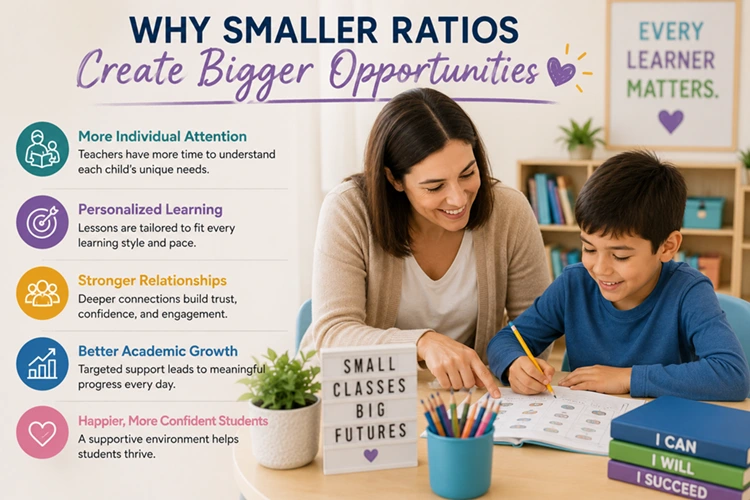
Instead of feeling “lost” in a crowded classroom, they become active participants in their own learning journey.
Confidence often leads to greater independence, curiosity, and resilience.
More Effective Family Communication
Small schools often foster stronger partnerships with families.
Teachers have more opportunities to communicate about:
- Academic progress
- Behavioral observations
- Learning strategies
- Goals
- Celebrations
- Areas needing additional support
Consistent communication helps parents and educators work together to support each child’s growth.
Student-to-Teacher Ratio Isn’t the Only Factor
While small class sizes offer many advantages, they’re most effective when combined with high-quality instruction and individualized support.
Parents should also consider whether a school provides:
- Experienced special educators
- Personalized learning plans
- Evidence-based teaching practices
- Sensory-friendly environments
- Social-emotional learning opportunities
- Collaboration with families
- Therapeutic support when appropriate
A small classroom alone isn’t enough—the overall educational philosophy matters just as much.
How Adaptive Learning Academy Supports Every Student
At Adaptive Learning Academy (ALA), our specialized micro-school model is intentionally designed to provide individualized attention in a nurturing environment.
Our students benefit from:
- Small classroom settings
- Personalized learning experiences
- Compassionate special educators
- Sensory-friendly learning spaces
- Integrated ABA support when appropriate
- Collaborative partnerships with families
Rather than expecting every child to learn the same way, we adapt instruction to meet each student’s unique strengths, learning style, and developmental needs. This personalized approach helps neurodiverse learners build confidence while making meaningful academic and social progress.
Is a Micro-School Right for Your Child?
If your child feels overwhelmed in large classrooms, struggles to receive enough individual attention, or would benefit from a more personalized educational experience, a micro-school may be an excellent fit.
Children who often thrive in smaller learning environments include those who:
- Learn differently than their peers.
- Need individualized instruction.
- Benefit from structured routines.
- Prefer quieter classrooms.
- Thrive with stronger teacher relationships.
- Need additional academic or behavioral support.
The right educational setting can make a significant difference in both learning and overall well-being.
Final Thoughts
The student-to-teacher ratio is much more than a number—it shapes the quality of every learning experience a child has throughout the school day.
Micro-schools provide smaller classrooms where educators can focus on building relationships, personalizing instruction, and supporting each student’s individual growth. For neurodiverse learners, this environment often leads to stronger academic progress, greater confidence, improved social development, and a genuine love of learning.
When children are truly known, understood, and supported, they gain more than knowledge—they gain the confidence to reach their full potential.