
Every child learns at their own pace, but sometimes a child needs additional time and targeted support to develop the academic, social, or developmental skills necessary for long-term success. Learning delays can make traditional classroom environments overwhelming, leaving children feeling frustrated and parents wondering how best to help.
A bridge program for learning delays is designed to close those learning gaps before they become larger obstacles. Rather than expecting children to “catch up” on their own, bridge programs provide individualized instruction, structured support, and confidence-building experiences that prepare students for future academic success.
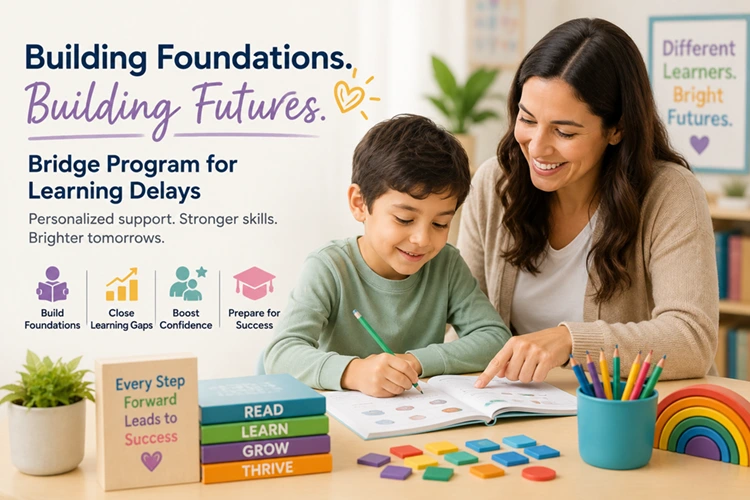
At Adaptive Learning Academy (ALA), we understand that every child’s journey is unique. Through personalized education, small class sizes, and integrated therapeutic support, we help neurodiverse learners build the skills they need while celebrating the strengths that make them who they are.
What Is a Bridge Program for Learning Delays?
A bridge program is an educational approach that helps children strengthen foundational skills before transitioning into more demanding academic settings. Instead of simply repeating material, these programs identify specific learning gaps and create individualized plans to address them.
A bridge program may focus on:
- Reading readiness
- Language and communication skills
- Early mathematics concepts
- Executive functioning
- Attention and focus
- Fine and gross motor development
- Social-emotional learning
- Classroom routines and independence
The goal isn’t just improving grades—it’s helping children develop the confidence and skills needed to become successful learners.
What Are Learning Delays?
A learning delay occurs when a child develops certain academic or developmental skills more slowly than expected for their age.
Learning delays can affect areas such as:
- Reading and language
- Writing
- Mathematics
- Speech and communication
- Attention
- Memory
- Processing speed
- Social interaction
- Motor coordination
Some children eventually catch up with appropriate intervention, while others may benefit from ongoing specialized educational support.
Learning delays can occur independently or alongside diagnoses such as:
- Autism Spectrum Disorder (ASD)
- ADHD
- Dyslexia
- Developmental delays
- Speech and language disorders
- Sensory processing differences
Early identification allows children to receive support before learning frustrations become deeply ingrained.
Signs a Child May Benefit from a Bridge Program
Every child develops differently, but certain signs may indicate additional educational support could be beneficial.
Your child might benefit from a bridge program if they:
- Struggle to recognize letters or sounds.
- Have difficulty following multi-step directions.
- Become frustrated during schoolwork.
- Avoid reading or writing activities.
- Need significantly more time to complete assignments.
- Have trouble staying focused.
- Experience challenges with transitions.
- Fall behind grade-level expectations despite consistent effort.
- Show low confidence in academic settings.
These challenges don’t define a child’s potential. They simply indicate that a different instructional approach may be more effective.
Why Early Intervention Matters
Children’s brains are incredibly adaptable during the early years.
Addressing learning delays early can help prevent academic gaps from widening over time. Early intervention often leads to improvements in:
- Academic achievement
- Communication skills
- Emotional regulation
- Social relationships
- Classroom participation
- Self-confidence
- Independence
The sooner children receive targeted support, the more opportunities they have to develop strong learning habits that benefit them throughout their education.
Personalized Learning Makes the Difference
One-size-fits-all instruction doesn’t work for every learner.
Bridge programs are most effective when they begin with understanding how each child learns best.
Some children benefit from:
- Visual learning supports.
- Hands-on activities.
- Movement-based instruction.
- Frequent breaks.
- Smaller learning groups.
- Multisensory teaching techniques.
- Individual pacing.
Personalized instruction allows children to make meaningful progress without feeling pressured to keep up with an entire class.
Building Academic Foundations
Many learning difficulties stem from gaps in foundational skills rather than a lack of intelligence.
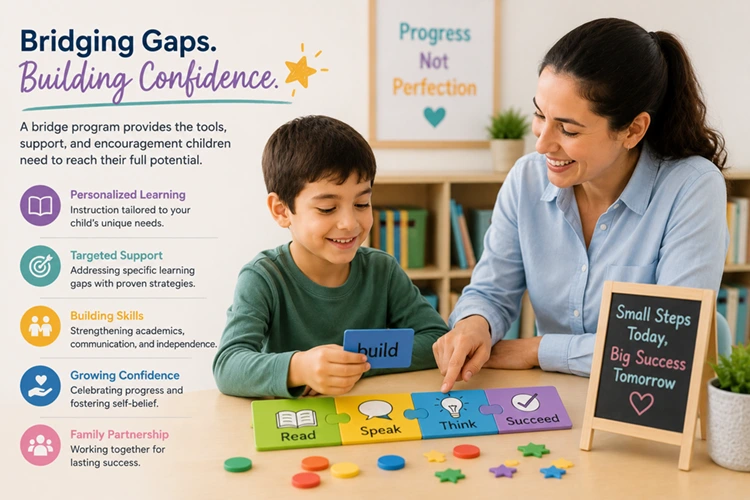
A bridge program often strengthens core academic areas such as:
Literacy
Children build phonemic awareness, vocabulary, reading comprehension, and early writing skills using structured, engaging instruction.
Mathematics
Students strengthen number sense, counting, problem-solving, patterns, and mathematical reasoning through hands-on learning experiences.
Communication
Language development, listening skills, and expressive communication are integrated throughout daily activities.
When these foundations become stronger, more advanced learning becomes significantly easier.
Supporting Executive Function Skills
Academic success depends on more than reading and math.
Executive functioning includes skills such as:
- Planning
- Organization
- Working memory
- Self-control
- Time management
- Flexible thinking
Children with learning delays often benefit from explicit instruction in these areas.
Visual schedules, predictable routines, and step-by-step guidance help children develop independence over time.
Social and Emotional Growth
Learning delays can sometimes affect a child’s confidence and relationships with peers.
Bridge programs should intentionally teach social-emotional skills alongside academics.
Children learn how to:
- Communicate respectfully.
- Solve problems.
- Manage frustration.
- Work cooperatively.
- Build friendships.
- Express emotions appropriately.
As children experience success in both academics and social situations, their overall confidence grows.
The Importance of Small Class Sizes
Children with learning delays often thrive in smaller educational environments.
Smaller classes allow educators to:
- Provide individualized attention.
- Notice learning challenges quickly.
- Adjust instruction immediately.
- Build stronger relationships.
- Reduce distractions.
- Create a calmer learning atmosphere.
Students often feel more comfortable asking questions and participating when they aren’t competing for attention in large classrooms.
Family Collaboration Is Essential
Parents play a vital role in helping children succeed.
Strong bridge programs maintain open communication with families through regular progress updates, collaborative goal setting, and practical strategies that can be used at home.
When parents and educators work together, children receive consistent support across every learning environment.
How Adaptive Learning Academy Helps Bridge Learning Gaps
At Adaptive Learning Academy (ALA), we believe every child deserves an educational experience that recognizes both their strengths and their individual learning needs.
Our specialized micro-school provides:
- Personalized learning plans
- Small classroom settings
- Sensory-friendly learning environments
- Integrated ABA support when appropriate
- Compassionate, experienced special educators
- Individualized instruction for neurodiverse learners
Rather than expecting students to fit into a traditional educational model, we adapt our teaching to meet each child where they are and help them progress at their own pace. This supportive approach allows students to strengthen foundational skills while building confidence and independence.
Choosing the Right Bridge Program
Not every bridge program is the same.
When evaluating programs, families should consider whether the school offers:
- Individualized assessments
- Small student-to-teacher ratios
- Experienced special educators
- Evidence-based teaching strategies
- Family involvement
- Progress monitoring
- Supportive, sensory-friendly environments
- A focus on both academic and emotional development
The best programs recognize that children learn differently—and that’s something to celebrate, not fix.
Final Thoughts
A bridge program for learning delays provides more than academic instruction. It gives children the opportunity to build essential skills, develop confidence, and rediscover the joy of learning.
With personalized support, patient educators, and an environment designed around each child’s unique needs, learning gaps can become stepping stones rather than barriers.
Every child deserves the chance to learn in a way that works for them. By providing early, individualized support, families and educators can help children build a strong foundation that prepares them for lifelong academic success and personal growth.