
Every child deserves to feel confident, capable, and valued. Yet for many neurodiverse children, building self-esteem can be more challenging. Whether a child has autism, ADHD, dyslexia, sensory processing differences, or another learning difference, they may experience misunderstandings, academic struggles, or social challenges that affect how they see themselves.
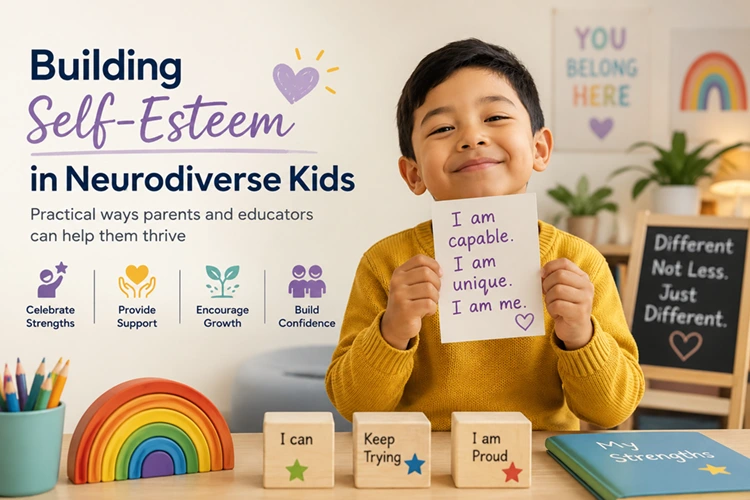
The good news is that self-esteem isn’t something children are simply born with—it’s something that grows through positive experiences, meaningful relationships, and the right support. When parents, teachers, and therapists work together to celebrate a child’s strengths while providing individualized guidance, neurodiverse children can develop lasting confidence that carries into adulthood.
At Adaptive Learning Academy (ALA), we believe every child has unique abilities worth celebrating. Through personalized instruction, small classroom environments, and integrated support, we help students discover their potential while developing the confidence they need to succeed.
What is Self-Esteem?
Self-esteem is how children think and feel about themselves. It influences whether they believe they can overcome challenges, make friends, learn new skills, and recover from setbacks.
Healthy self-esteem doesn’t mean believing you’re perfect. Instead, it means understanding that everyone has strengths and areas where they need support. Children with healthy self-esteem are more likely to:
- Try new activities without excessive fear.
- Learn from mistakes instead of giving up.
- Build positive friendships.
- Express their thoughts and feelings confidently.
- Develop resilience during difficult situations.
For neurodiverse children, nurturing this mindset often requires intentional encouragement and environments that recognize different ways of learning.
Why Self-Esteem Can Be More Difficult for Neurodiverse Children
Many neurodiverse children spend much of their day comparing themselves to peers who learn or communicate differently. They may hear more corrections than compliments or struggle in environments that aren’t designed for their learning style.
Some common experiences that can affect self-esteem include:
- Difficulty keeping up with traditional classroom expectations.
- Social misunderstandings or feeling left out.
- Sensory overload in busy environments.
- Frustration when tasks require more time or different approaches.
- Frequent focus on weaknesses instead of strengths.
Over time, these experiences may cause children to believe they’re “not smart enough” or “not good enough,” even though their abilities simply shine in different ways.
Recognize and Celebrate Their Strengths
Every neurodiverse child has talents that deserve recognition.
Some children have exceptional memories. Others excel in art, music, building, technology, storytelling, mathematics, or creative problem-solving. Many display incredible honesty, determination, empathy, or attention to detail.
Instead of focusing primarily on what needs improvement, intentionally notice what your child does well.
For example, you might say:
- “I love how creative your solution was.”
- “You worked really hard today.”
- “You notice details that many people miss.”
- “I’m proud of how kind you were.”
Specific praise helps children understand exactly what makes them special.
Encourage Effort Instead of Perfection
Children often believe mistakes mean failure. This belief can be especially strong among neurodiverse learners who may already face additional challenges.
Instead of praising only successful outcomes, recognize effort, persistence, and growth.
Rather than saying:
“You’re so smart.”
Try:
“You kept working even when it was difficult.”
This teaches children that abilities grow with practice rather than being fixed.
Create Opportunities for Success
Confidence grows from experience.
Children who regularly experience success begin to believe in their abilities. Look for activities where your child can genuinely succeed.
These might include:
- Art projects
- Music lessons
- Swimming
- Robotics
- Coding
- Cooking
- Gardening
- Building with LEGO®
- Nature exploration
- Animal care
Success outside academics often strengthens confidence inside the classroom as well.
Teach Positive Self-Talk
Many children develop an inner voice that’s overly critical.
Help your child replace negative thoughts with encouraging ones.
Instead of:
“I can’t do this.”
Practice saying:
- “I can learn.”
- “I’m still practicing.”
- “This is hard, but I can keep trying.”
- “Everyone learns differently.”
Model this yourself. Children learn by watching how adults respond to mistakes.
Build Independence Through Small Responsibilities
Giving children age-appropriate responsibilities helps them feel capable.
Simple tasks might include:
- Packing their backpack.
- Feeding a pet.
- Choosing clothes.
- Helping prepare meals.
- Organizing their study space.
- Watering plants.
As they successfully complete responsibilities, they begin seeing themselves as competent and dependable.
Support Healthy Friendships
Positive relationships play a major role in self-esteem.
Help your child find opportunities to connect with peers who share similar interests.

Small-group environments, clubs, extracurricular activities, and structured playdates often make social interactions less overwhelming.
Quality friendships matter much more than having many friends.
Avoid Constant Comparisons
Every child’s developmental journey is unique.
Comparing your child with siblings, classmates, or neighbors can unintentionally damage confidence.
Instead of asking:
“Why can’t you do what everyone else does?”
Try asking:
“What support would help you succeed?”
This shift encourages growth rather than shame.
Help Children Understand Neurodiversity
Many children feel relieved when they understand why they learn differently.
Age-appropriate conversations about neurodiversity can help children recognize that differences aren’t flaws.
Explain that every brain works differently.
Some people learn best by listening.
Others by moving.
Others by seeing pictures.
Others need extra time.
Different doesn’t mean less capable.
Understanding this often reduces feelings of isolation and builds self-acceptance.
Partner with Educators Who Understand Neurodiversity
The learning environment has an enormous influence on confidence.
Children thrive when teachers recognize their strengths, adapt instruction, and celebrate progress instead of focusing solely on deficits.
Supportive educational environments often include:
- Individualized learning plans.
- Small class sizes.
- Flexible teaching strategies.
- Positive behavior support.
- Sensory-friendly spaces.
- Consistent communication with families.
These elements help students feel safe enough to take risks, ask questions, and develop confidence over time.
Encourage Self-Advocacy
As children grow, they benefit from learning how to communicate their needs.
Teach them simple phrases like:
- “Can you explain that another way?”
- “I need a short break.”
- “Can I use my visual schedule?”
- “I understand better when I see examples.”
Self-advocacy empowers children to participate actively in their education rather than feeling helpless.
Celebrate Progress, Not Just Milestones
Building self-esteem happens one small success at a time.
Celebrate moments such as:
- Trying something new.
- Making a friend.
- Completing homework independently.
- Asking for help appropriately.
- Managing emotions more effectively.
- Showing persistence.
These everyday victories create lasting confidence.
How Adaptive Learning Academy Supports Self-Esteem
Children develop confidence when they’re seen, understood, and supported as individuals.
At Adaptive Learning Academy (ALA), our specialized micro-school model combines personalized education, small classrooms, sensory-friendly learning spaces, and integrated therapeutic support to help neurodiverse students reach their potential. We focus on each child’s unique strengths while providing individualized instruction that encourages both academic and personal growth.
Families also benefit from a collaborative partnership with educators who understand the importance of building confidence alongside academic achievement. Our goal is to create an environment where every student feels capable, respected, and excited to learn.
Final Thoughts
Building self-esteem in neurodiverse kids is a journey that requires patience, encouragement, and understanding. Every child deserves to feel valued for who they are—not measured against someone else’s path.
By celebrating strengths, encouraging effort, creating opportunities for success, and providing supportive learning environments, parents and educators can help children develop confidence that lasts a lifetime.
When neurodiverse children believe in themselves, they’re more willing to embrace challenges, build meaningful relationships, and pursue their goals with resilience. With the right guidance and a community that recognizes their unique abilities, they can flourish both inside and outside the classroom.