
Making friends comes naturally for some children, while for others, it can feel overwhelming. If your child struggles to start conversations, understand social cues, manage emotions, or build lasting friendships, you’re certainly not alone. Many parents wonder how to improve a child social skills and relationship with peers, especially when traditional classrooms don’t provide the individualized support their child needs.
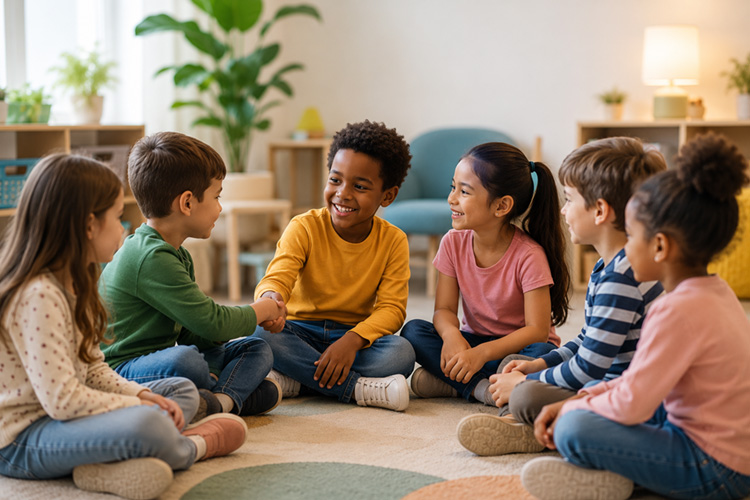
At Adaptive Learning Academy (ALA) in Richmond, Texas, we believe that every child deserves the opportunity to build meaningful friendships and develop the confidence to navigate everyday social situations. As a specialized micro-school, we create an environment where children can learn these essential life skills through personalized instruction, compassionate guidance, and real-world practice.
In this article, we’ll explore why some children struggle socially, how micro-schools provide a unique advantage, and how structured social skills programs can help children develop authentic relationships that last.
Why Social Skills Matter More Than Ever
Social skills are much more than simply making friends. They form the foundation for success in school, future careers, and everyday life.
Children with strong social skills are often better able to:
- Communicate their thoughts and feelings effectively
- Understand the emotions of others
- Resolve conflicts peacefully
- Work cooperatively in groups
- Develop healthy friendships
- Build confidence in new situations
These abilities don’t always develop automatically. For many children—especially those who are neurodiverse—they require intentional teaching, practice, and encouragement.
Without these skills, children may experience loneliness, frustration, anxiety, or difficulty participating in classroom activities.
Why Some Children Find Friendships Challenging
Every child develops differently. Some are naturally outgoing, while others need additional support learning the unwritten rules of social interaction.
Children may struggle with:
- Starting conversations
- Taking turns during play
- Reading facial expressions or body language
- Understanding personal space
- Managing strong emotions
- Sharing interests appropriately
- Working in groups
- Handling disagreements calmly
These challenges don’t reflect a lack of intelligence or kindness. Instead, they often indicate that a child needs explicit instruction and opportunities to practice in supportive settings.
How Micro-Schools Create Better Opportunities for Social Growth
One of the greatest strengths of a micro-school is the ability to personalize every child’s learning experience.
Unlike large traditional classrooms, micro-schools typically offer:
Smaller Class Sizes
Children receive more individual attention from teachers, making it easier to notice social challenges early and provide immediate guidance.
Meaningful Peer Interactions
Rather than being overwhelmed by large groups, students interact within smaller communities where friendships can develop naturally over time.
Individualized Support
Teachers understand each child’s unique strengths, learning style, and communication preferences, allowing them to coach social situations as they happen.
Inclusive Environment
Children feel accepted for who they are, creating the emotional safety needed to practice new social skills without fear of judgment.
At Adaptive Learning Academy, these advantages are especially important because we specialize in serving neurodiverse learners in a sensory-friendly environment designed to help every child thrive.
How to Improve a Child Social Skills and Relationship with Peers
Parents often ask what they can do to help their child build friendships. While every child is different, several proven strategies consistently make a difference.
1. Teach Social Skills Directly
Children benefit from learning specific social behaviors rather than being expected to “figure it out.”
This includes:
- Greeting others
- Making eye contact (when appropriate and comfortable)
- Asking questions
- Taking turns in conversations
- Listening actively
These skills become easier through guided practice.
2. Encourage Emotional Awareness
Understanding emotions is a critical part of successful relationships.
Children who can recognize their own feelings—and identify emotions in others—are often better equipped to respond appropriately during social interactions.
3. Practice Through Real Experiences
Role-playing is helpful, but genuine friendships develop through repeated real-life interactions.
Structured group activities allow children to practice:
- Cooperation
- Problem-solving
- Sharing
- Teamwork
- Conflict resolution
4. Celebrate Small Successes
Confidence grows one success at a time.
Whether it’s introducing themselves to another child, joining a group activity, or expressing their feelings appropriately, recognizing progress encourages continued growth.
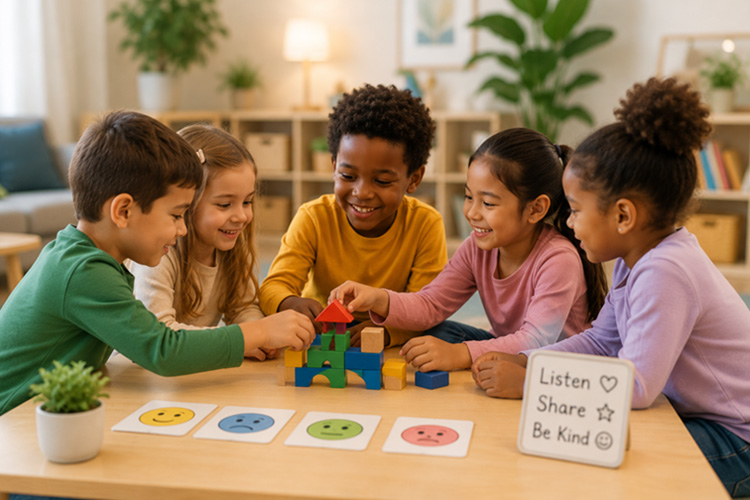
Inside Adaptive Learning Academy’s Social Skills Class
At Adaptive Learning Academy, our Social Skills Class is designed to help children build confidence while developing meaningful relationships with peers.
Through engaging activities and guided interactions, students learn how to:
Express Themselves
Children develop healthy ways to communicate their thoughts, feelings, and ideas while learning to listen respectfully to others.
Understand Emotions
Recognizing emotions in themselves and others helps children respond with empathy and improve everyday interactions.
Work as a Team
Group activities teach cooperation, problem-solving, and shared responsibility in enjoyable, low-pressure settings.
Build Confidence
As children experience successful interactions, their self-esteem naturally grows, making future social situations feel less intimidating.
Make Friends
Rather than memorizing social “rules,” children experience authentic opportunities to create meaningful connections with peers who share similar experiences.
Why Neurodiverse Students Benefit from Specialized Social Skills Support
Many neurodiverse children—including those with autism, ADHD, sensory processing differences, or learning disabilities—benefit from structured instruction that breaks complex social situations into manageable steps.
Adaptive Learning Academy provides:
- A sensory-friendly learning environment
- Compassionate, experienced educators
- Small-group instruction
- Individualized support
- Inclusive learning experiences
- Opportunities for repeated practice
Because our educators understand neurodiverse learners, children receive encouragement without pressure, helping them develop confidence at their own pace.
The Parent’s Role in Social Development
Parents remain an essential part of every child’s social growth.
Simple activities at home can reinforce what children learn during structured programs:
- Talk about emotions throughout the day.
- Encourage family conversations during meals.
- Practice taking turns while playing games.
- Read books that discuss friendships and empathy.
- Arrange small playdates with supportive peers.
- Model respectful communication.
Consistency between home and school helps children apply new skills across different environments.
Why Early Support Makes a Difference
Social confidence often builds gradually.
Children who receive support early are more likely to:
- Form lasting friendships
- Feel comfortable participating in group activities
- Experience greater self-confidence
- Develop stronger communication skills
- Enjoy learning environments
- Build positive relationships throughout life
Even small improvements today can create lasting benefits for years to come.
Join Adaptive Learning Academy’s Social Skills Class
If you’ve been wondering how to improve a child social skills and relationship with peers, the answer often lies in providing consistent opportunities to learn, practice, and succeed in a supportive environment.
At Adaptive Learning Academy (ALA), we are committed to helping children build friendships, strengthen communication, understand emotions, and develop the confidence they need to thrive both inside and outside the classroom.
Our specialized micro-school in Richmond, TX, provides an inclusive, sensory-friendly environment where every child is valued and supported.
Program Details
- Ages: 5–13
- Schedule: Monday & Wednesday Evenings
- Dates: June 15 – August 5
- Location: Adaptive Learning Academy, Richmond, TX
- Contact: info@adaptivelearning-academy.org
Spots are limited, so we encourage interested families to reach out early for additional information.
When children feel understood, supported, and included, they don’t just learn social skills—they build the confidence to create genuine friendships that can last a lifetime.